



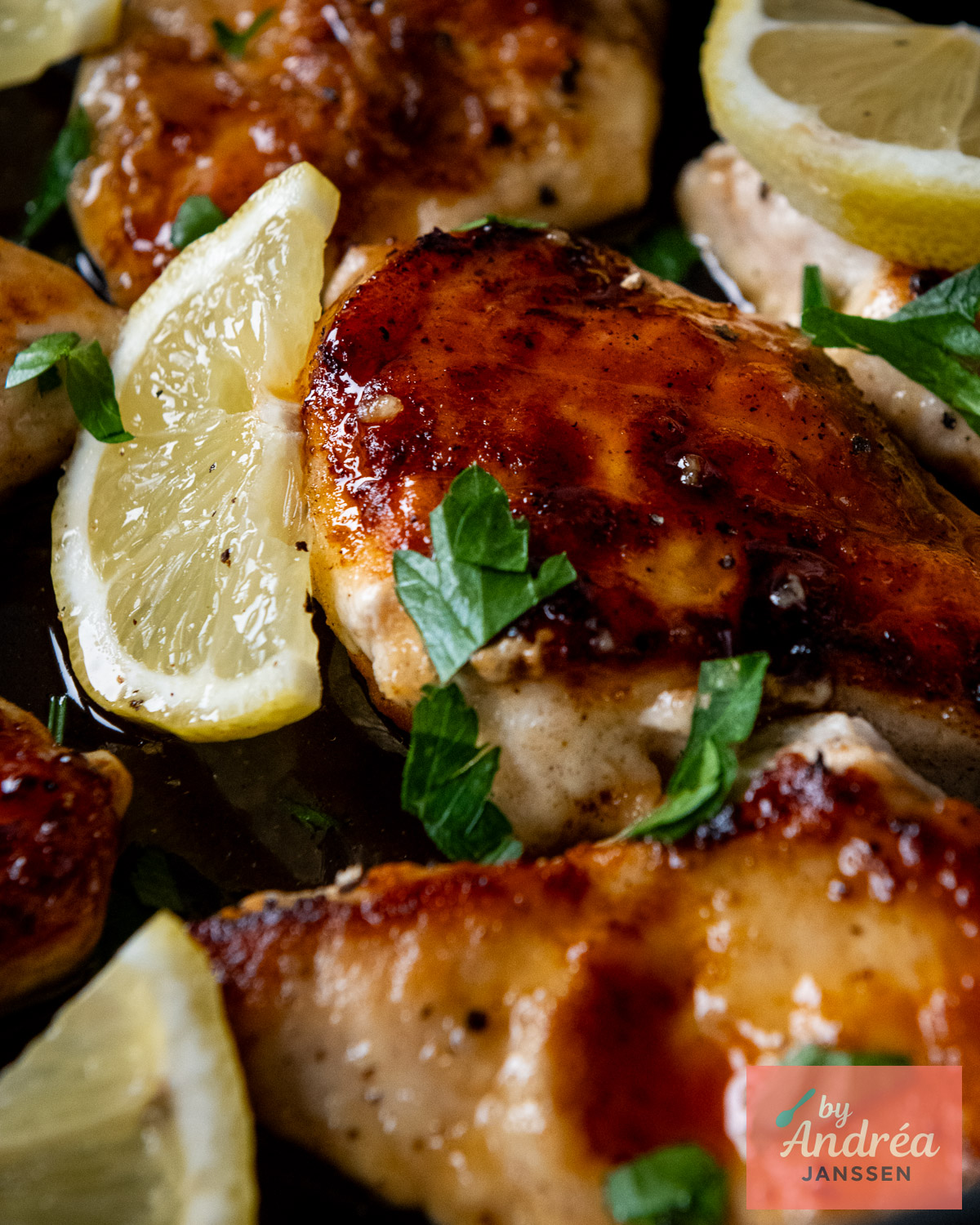
Do chicken breasts make you think of dry, bland meat? These honey lemon chicken breasts stay tender, with a thick sauce that makes every bite sweet, tangy, and savory.
Simple chicken breasts, honey, and lemon juice are the base of this recipe. The browned bits in the skillet add extra flavor to the sauce, which simmers down until it coats the chicken in a glossy glaze.
Jump to:
Why make this?
I remember eating dry, bland chicken growing up and I wasn't much of a fan. But once I moved out on my own, I really learned to appreciate it. I use it in my nasi goreng and my family is always happy when I make slow cooker pulled chicken. I also love chicken with orange thyme sauce though I tend to save that one for Sundays and holidays.
This honey lemon chicken was something I wanted to eat again right away: tender chicken with a thick, glossy sauce clinging to it. I had the recipe just how I wanted it on the second try, but I kept "testing" it after that. I just couldn't get enough.
What You'll Need
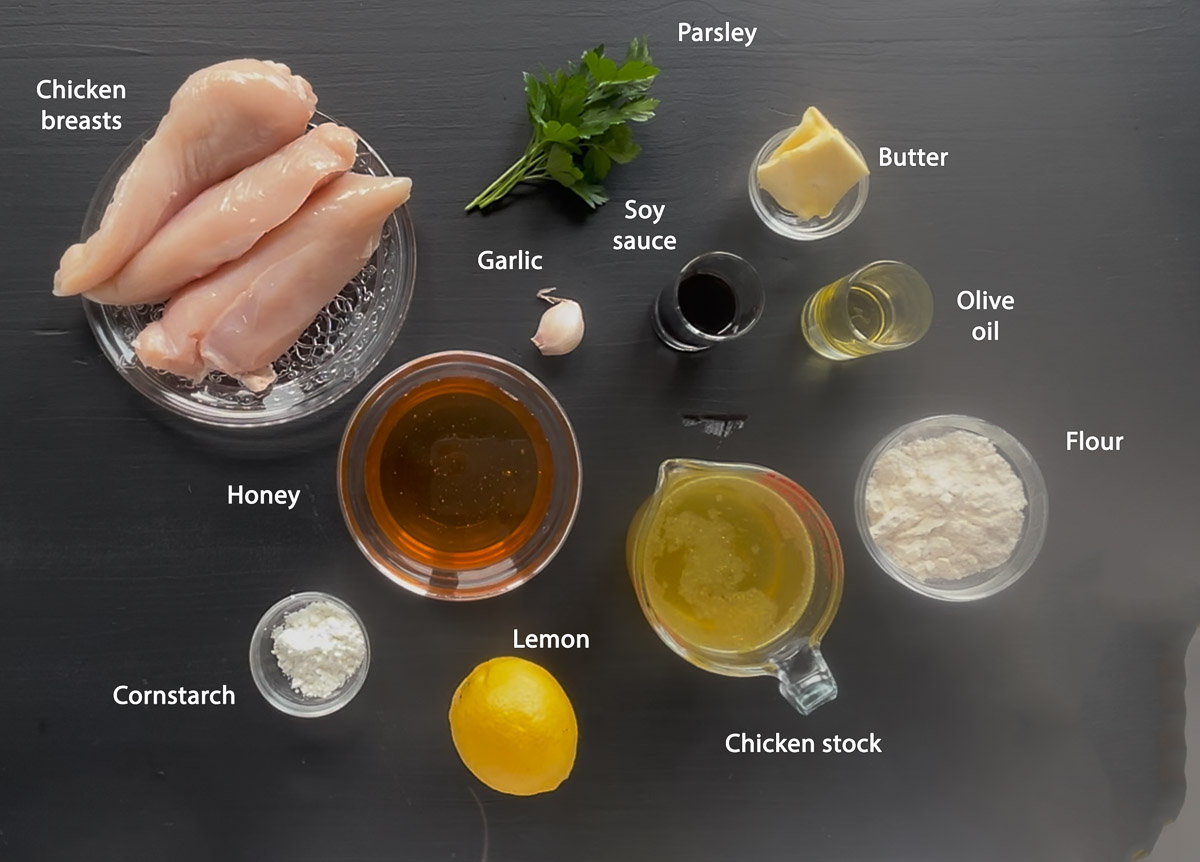
- Chicken breasts: Slice the breasts in half horizontally, then pound them to about ½ inch (1 cm) thick. You can also use boneless, skinless chicken thighs, which have a richer flavor and a little more fat. Pound those to an even thickness, too, and check that they're cooked through. They may need longer than the chicken breasts.
- All-purpose flour: A thin coating helps the chicken develop a light crust and stay tender and juicy. Shake off any excess flour.
- Honey and lemon: Use good honey and freshly squeezed lemon juice. Honey sweetens the sauce, while lemon adds a bright, tart flavor.
- Chicken broth and soy sauce: Both add savory flavor and salt. Use regular soy sauce, such as Japanese soy sauce or Indonesian kecap asin. Taste the sauce before adding more salt.
- Cornstarch: This thickens the sauce. Stir it with cold water until smooth.
How to Make Honey Lemon Chicken
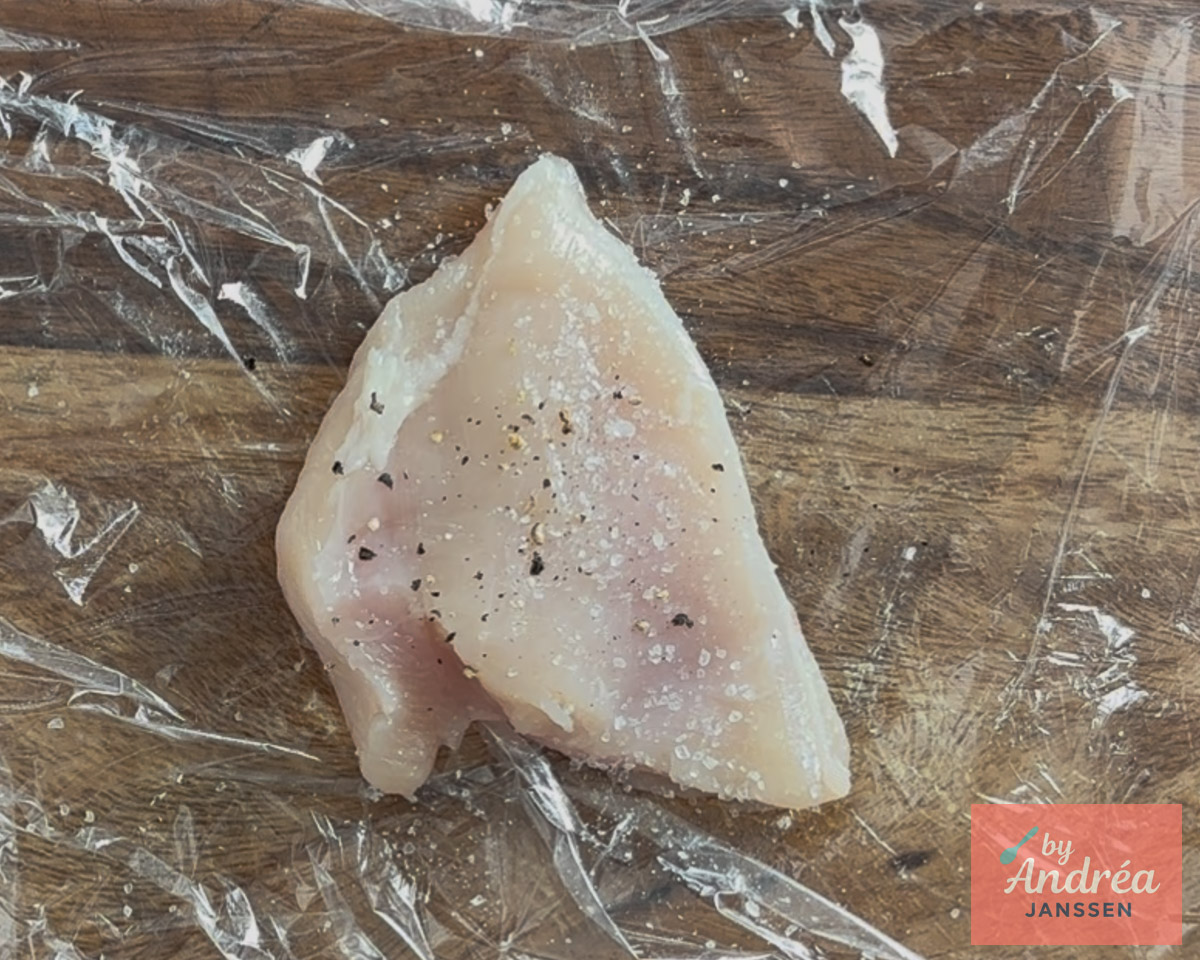
- Step 1: Slice the chicken breasts in half horizontally and pound the 8 pieces to about ½ inch (1 cm) thick. Season with salt and pepper, coat with flour and shake off the excess.
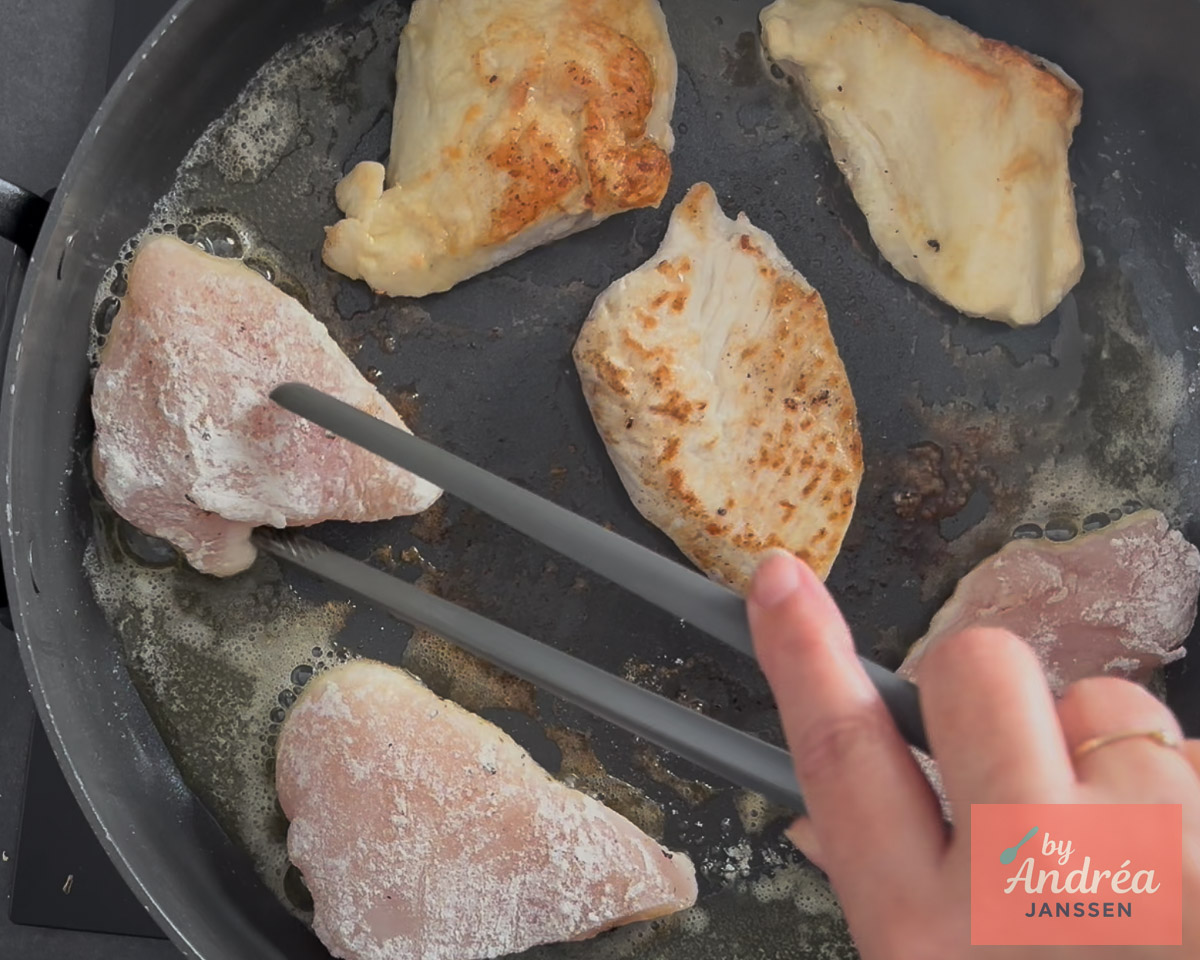
- Step 2: Heat the butter and oil over medium-high heat. Cook the chicken until golden brown on both sides, then transfer to a plate.
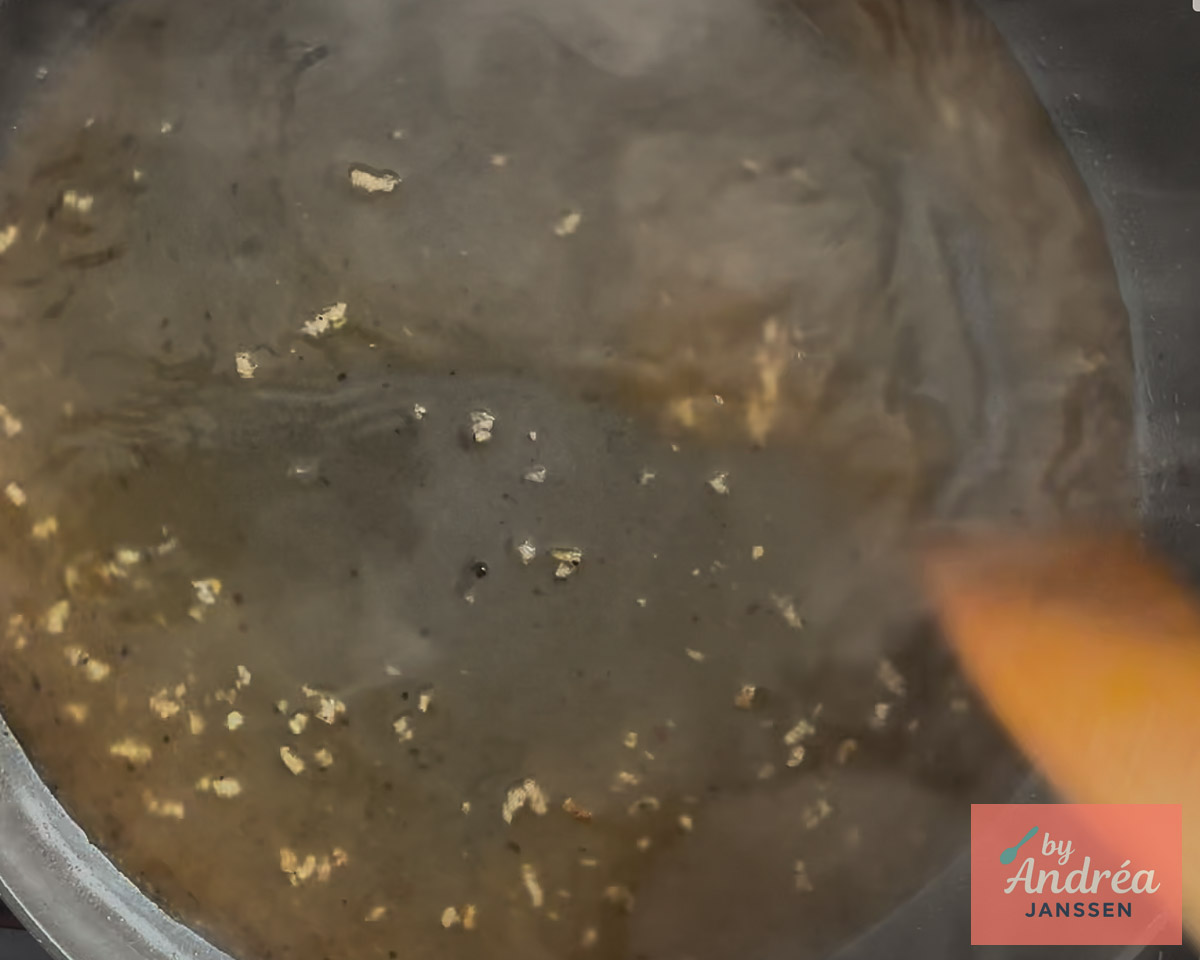
- Step 3: Cook the garlic in the same skillet, then add the broth and bring to a boil. Scrape up the browned bits from the bottom. Stir in the honey, lemon juice, soy sauce, and cornstarch mixture. Simmer until the sauce is thick and syrupy.
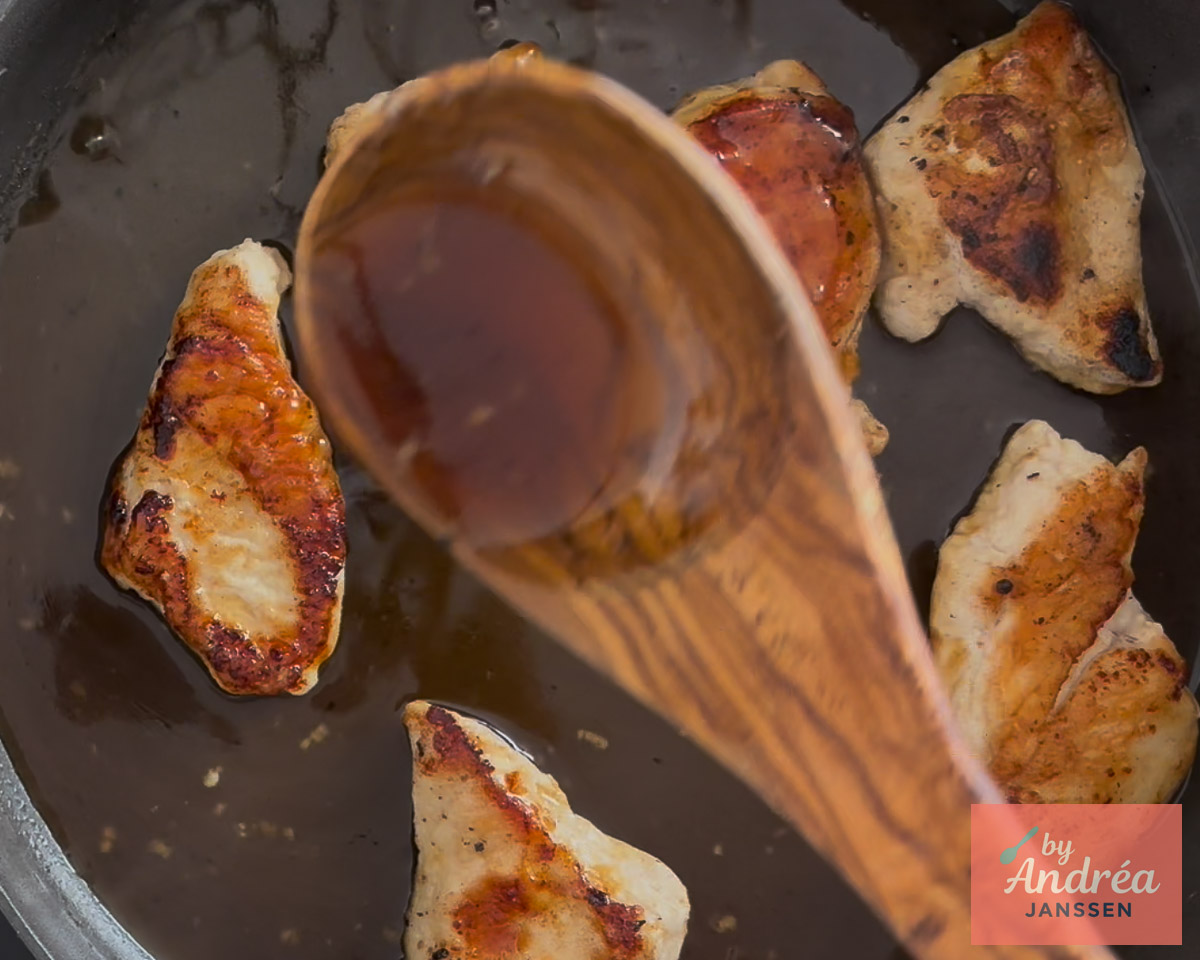
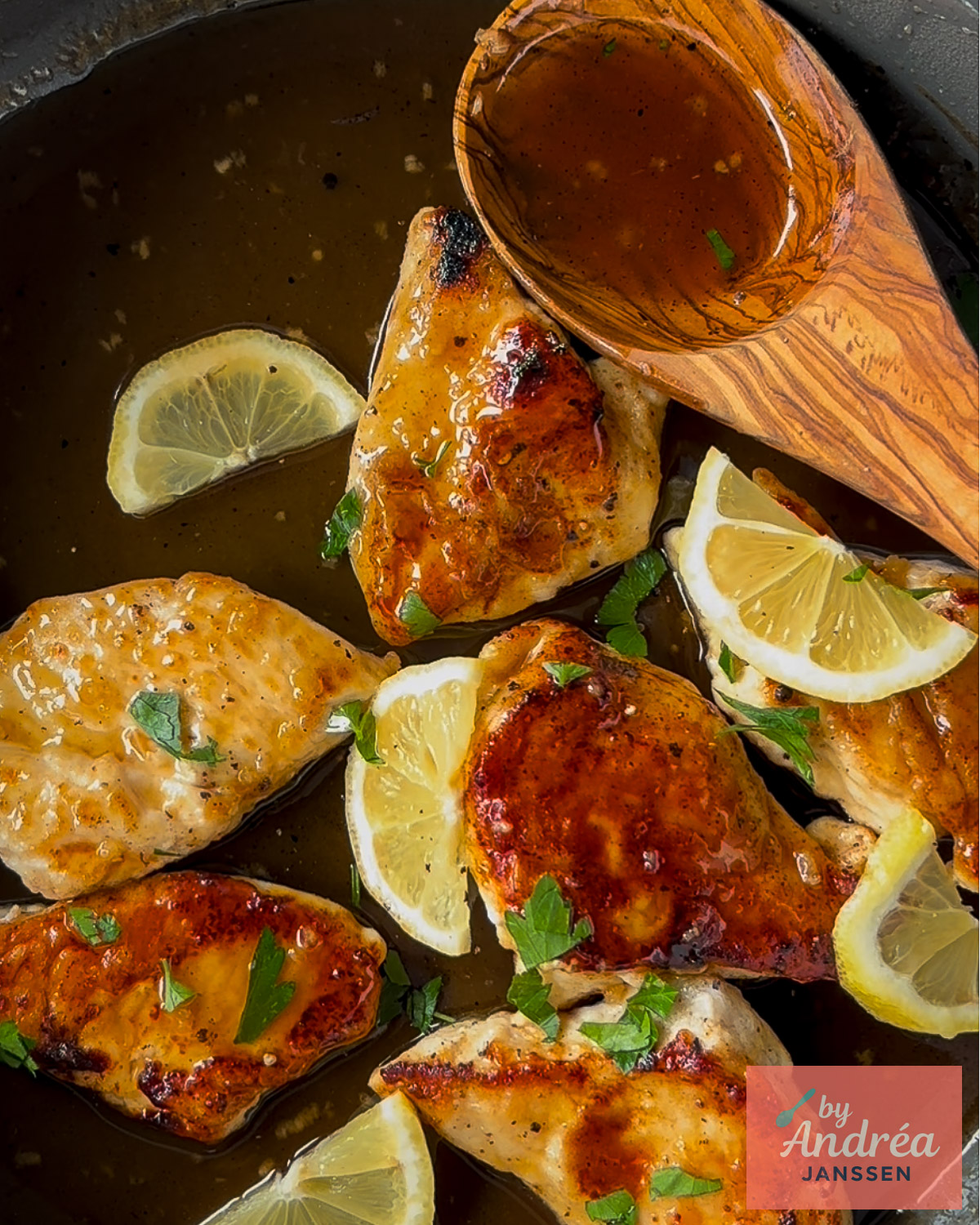
- Step 4: Season the sauce with salt and pepper. Pour it over the chicken, or return the chicken to the skillet to warm through in the sauce. Garnish with parsley and lemon slices.

Andrea's Tips
- Don't skip pounding the chicken. Thin pieces, about ⅜ inch (1 cm) thick, cook through quickly without drying out. If one end is thicker than the rest, the center may still be raw while the thinner end is already cooked and starting to dry out.
- Use an instant-read thermometer. Thin chicken can go from cooked through to dry very quickly, and you can't tell the difference just by looking. Insert the thermometer from the side into the thickest part and take the chicken out of the skillet when it reaches 165°F (74°C).
- Wait until the butter foams before adding the chicken. If the skillet isn't hot enough, the flour coating will stick and you won't get that golden-brown crust.
- Take the sauce off the heat while it's a little thinner than you want it. Cornstarch continues to thicken the sauce as it cools. When it coats the back of a spoon but still pours easily, it's ready.
- Return the chicken to the sauce at the very end so it doesn't overcook.
What to Serve with Honey Lemon Chicken
Rice is an easy choice because you can spoon the sauce over it. Prefer potatoes? Roasted potatoes with thyme and garlic while you make the chicken. Asian green beans work well as a vegetable side.
Did you make this recipe?
So, how did it turn out? Tell me all about it (and a star rating would make my day.)
📖 Recipe
RECIPE CARD

Recipe Help
Two easy tools to make cooking even easier. Cooking mode keeps the screen on. The easy-step recipe displays the recipe step by step, including the ingredients needed. And you can adjust servings easily
Ingredients
Chicken
- 2 pounds chicken breasts, 4 pieces
- salt and pepper, to taste
- 3 tablespoons all-purpose flour
- 1½ tablespoons butter
- 1 tablespoon olive oil
Sauce
- 1 clove garlic, minced or squeezed
- 1 cup chicken stock
- 2 teaspoons cornstarch
- 2 tablespoons cold water
- ½ cup honey, 8 tablespoons
- ¼ cup lemon juice, freshly squeezed
- 1 teaspoon Japanese soy sauce, or Indonesian kecap asin
For Serving (Optional)
- lemon slices
- Fresh Parsley, finely chopped
All my recipes are written both in Metric (gram / ml) and US Customary (cups / pounds). Here you can select which type of amount you would like to see.
Instructions
Prepare the Chicken
- Lay a chicken breast flat on a cutting board. Hold your knife parallel to the board and slice the breast in half horizontally to make 2 thin pieces. Repeat with the remaining breasts. You should have 8 pieces.2 pounds chicken breasts
- Place the chicken between sheets of plastic wrap and gently pound to an even thickness of about ½ inch (1 cm). Use a meat mallet or the flat bottom of a saucepan.
- Season both sides with salt and pepper. Place the flour in a shallow dish, coat the chicken, and shake off any excess.salt and pepper, 3 tablespoons all-purpose flour
Cook the Chicken and Make the Sauce
- Cook the chicken in batches so the pieces fit in a single layer with a little space between them. Divide the butter and olive oil between the batches. Heat the first portion of butter and oil in a skillet over medium-high heat until the butter foams.1½ tablespoons butter, 1 tablespoon olive oil
- Add the first batch of chicken. Cook for about 2 minutes on the first side and 1 to 2 minutes on the other side, until golden brown on both sides.
- Check the internal temperature by inserting an instant-read thermometer from the side into the center of the thickest part. The chicken should reach at least 165°F (74°C). If the chicken is browned but hasn't reached that temperature, lower the heat and continue cooking until it does.
- Transfer the cooked chicken to a clean plate and cover loosely with foil. Add more of the reserved butter and oil for the next batch. Leave the browned bits in the skillet.
- After removing the last batch of chicken, add the garlic to the skillet. Cook, stirring, for about 20 seconds, until fragrant. Don't let the garlic brown.1 clove garlic
- Pour in the chicken broth and bring to a boil. Use a spatula to scrape up the browned bits from the bottom of the skillet.1 cup chicken stock
- Mix the cornstarch with the cold water until smooth and set aside.2 teaspoons cornstarch, 2 tablespoons cold water
- Stir the honey, lemon juice, and soy sauce into the skillet. Stir the cornstarch mixture again until smooth, then slowly pour it into the sauce while stirring.½ cup honey, ¼ cup lemon juice, 1 teaspoon Japanese soy sauce
- Simmer for 2 to 3 minutes, stirring regularly. The sauce is ready when it coats the back of a spoon but still pours easily.
- If the sauce is too thin, simmer a little longer, checking the consistency regularly. If it's too thick, stir in 1 tablespoon of water, adding more as needed.
- Taste the sauce and add salt and pepper if needed.
Serve
- Return the chicken to the skillet and turn to coat in the sauce. Warm over low heat until the chicken is heated through.
- Divide the chicken among plates and spoon the sauce over it. Garnish with parsley and lemon slices, if desired.lemon slices, Fresh Parsley
Notes
- If the sauce is too thick, stir in water, 1 tablespoon at a time, until it pours easily over the chicken.
- Refrigerator: Store for up to 2 days at 40°F (4°C).
- Freezer: Freeze for up to 3 months in an airtight freezer-safe container. Thaw in the refrigerator. The sauce may be a little thinner after thawing.
- Reheating: Warm the chicken and sauce over low heat in a covered skillet. Add 1 tablespoon of water if the sauce is too thick. Turn the chicken and stir the sauce as it heats, until everything is steaming hot throughout. Stop heating at that point to keep the chicken as juicy as possible.
Nutrition



Leave a Reply