



Think duck breast is restaurant food, too fussy to make at home? It isn't. This Duck Breast with Honey Balsamic Pan Sauce is on the table in 25 minutes, and the sauce starts with the duck's own juices, which a sauce from a separate saucepan never gets.
The duck is your only splurge: two spoonfuls of honey, a lemon and a bottle of balsamic glaze turn it into a main that looks like you spent the afternoon at the stove. Tip the juices from the foil into the pan, whisk, and within two minutes the sauce coats the back of your spoon.

Jump to:
Why I Make This Recipe
I have a thing for duck breast in fall and winter, especially when we have guests. Hosting has one catch, and I doubt I'm the only one who knows it: the cook ends up at the stove and hears the best story of the night secondhand. We Dutch have a word for the evening I actually want, gezellig, and the host is supposed to be part of it.
Duck breast is how I get there. It looks like a lot of trouble (duck always does), and it's done so fast that I'm back in my chair before anyone misses me. You get crisp skin and a sweet-sour sauce, and you get to spend the evening at your own table.
Ingredients You Need
For the preparation of Oven Roast Duck Breast with Honey Balsamic Sauce you need the following ingredients (you can find the correct amounts at the bottom of the blog in the recipe card):

- Duck Breast: Look for skin-on breasts of about 5 to 6 ounces each. In most US stores that means Pekin (Long Island) duck, and four of them make the 1⅓ pounds in the recipe card. A Moulard breast can weigh close to a pound on its own; it works, but it needs more time in the oven, so go by the thermometer instead of the clock.
- Balsamic glaze: (also sold as balsamic cream) delicious balsamic vinegar that has been reduced to a syrup (or glaze as the name says) making it velvety soft and fuller in taste.
- Honey: the sweetener that makes the balsamic glaze less tart and gives a sweet and sour sauce.
- Lemon: A second acidity, which makes the sauce just that little bit deeper in taste.
The Honey Balsamic Sauce for Duck
21 home cooks rated this recipe 5 stars, and I'm fairly sure the sauce has a lot to do with it. It's a real pan sauce: the rendered duck fat and the roasting juices from the foil go back into the pan, and the balsamic glaze, honey, and lemon juice are whisked in. That's why it tastes so much deeper than a sauce made in a separate saucepan.
The balance is what makes it work with duck. Duck breast is rich, red meat. The balsamic brings acidity, the honey rounds off the sharp edges, and the lemon juice keeps it fresh instead of cloying. Sweet and sour, not sweet.
Glaze or vinegar? I use balsamic glaze (balsamic cream), which is already reduced to a syrup. That means the sauce is ready in 2 minutes. If you only have regular balsamic vinegar, that works too: use 8 tablespoons instead of 4 and let it simmer 3 to 5 minutes longer, until it coats the back of a spoon.
Sauce too thin? Simmer it a minute or two longer, it thickens as the honey and glaze reduce.
Too tart? Whisk in an extra teaspoon of honey. Too sweet? A few extra drops of lemon juice fix it.
This sauce isn't only for duck, by the way. It's just as good over pork tenderloin, roasted Brussels sprouts, or a goat cheese salad.
How to Make Pan-Seared Duck Breast

- Cut the breasts skin side in a criss-cross pattern with a sharp knife. Duck is best roasted in its own fat because that gives a lot of flavor. Because the skin of the duck is cut into a crosshatch pattern, the fats melt better and you'll get a nice and crispy skin.
- Place the duck breast in a frying pan and brown the meat. Sear the duck in the pan on both the fat side and the meat side and then place duck breasts in the oven. This keeps the duck from drying out. And pre-baking the duck gives it more flavor.
- Place the duck breasts on top of aluminum foil and wrap the foil around the meat to form a nice package and bake in the oven for 5 minutes. This time gives a medium cooked duck breast. By extending the baking time by 5 minutes, the duck is cooked through.
- Pour the cooking liquid from the aluminum foil back into the pan. Pour in the lemon juice, balsamic glaze and honey and heat until the sauce is glossy and smooth. Serve with the duck.
How Pink Should Duck Breast Be?
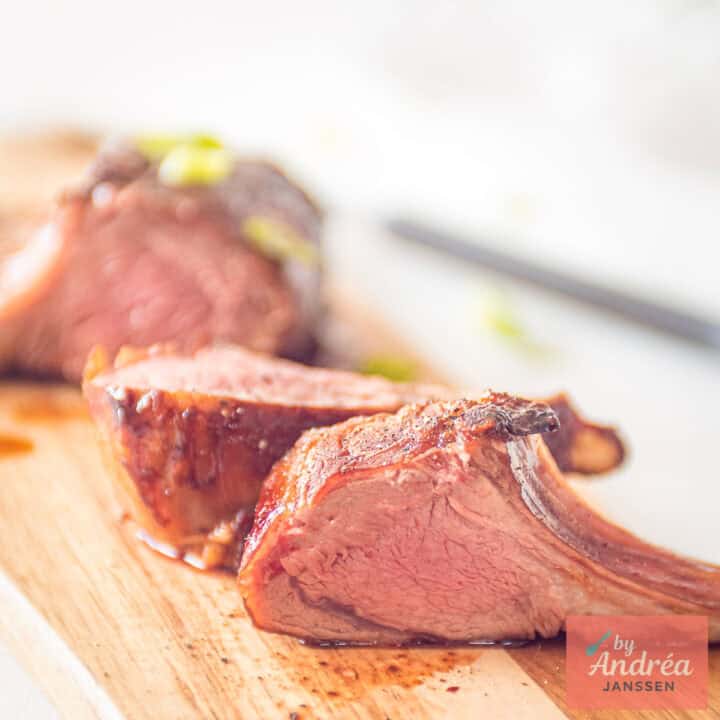
Duck breast eats more like steak than like chicken, which is why restaurants serve it pink. I take mine out of the oven at 126 °F (52 °C); it climbs a few more degrees while it rests.
The USDA recommends 165 °F (74 °C) for all duck, so if you're cooking for someone pregnant, very young or elderly, leave it in the oven longer and expect firmer, grayer meat.

Andrea's Tips
- Pat the skin completely dry before you score it, and score only the skin; cuts into the meat let juice escape.
- Keep 4 teaspoons of the rendered fat for the sauce and save the rest in a jar for roasting potatoes.
- Use a thermometer: duck breasts vary so much in thickness that the oven time is a starting point, never a promise.
What to Serve with Duck Breast
The sauce is rich, so keep the sides simple. A green salad is what you see in the photos. On a holiday table I'd add garlic-shallot mashed potatoes to catch every last bit of sauce, and orange glazed Brussels sprouts, because orange and duck are a great combination known for a long time.
Frequently asked questions
- Can I use balsamic vinegar instead of balsamic glaze? Yes. Double the amount (8 tablespoons) and simmer 3 to 5 minutes longer until syrupy. The taste is slightly sharper, so taste and add a little extra honey if needed.
- Can I make the honey balsamic sauce ahead? The base (balsamic glaze, honey, lemon juice) can be mixed a day ahead and kept in the refrigerator. For the full flavor, still finish it in the pan with the duck juices just before serving.
- Why did my sauce turn out bitter? The heat was too high. Honey and balsamic burn quickly. Keep the pan on medium-low and only heat until everything is combined and glossy.
📖 Recipe
RECIPE CARD


Recipe Help
Two easy tools to make cooking even easier. Cooking mode keeps the screen on. The easy-step recipe displays the recipe step by step, including the ingredients needed. And you can adjust servings easily
Ingredients
- 1⅓ pound duck breast, 4 pieces of meat
- 4 tablespoons balsamic glaze
- 2 tablespoons honey
- 2 tablespoons lemon juice
All my recipes are written both in Metric (gram / ml) and US Customary (cups / pounds). Here you can select which type of amount you would like to see.
Instructions
- Preheat the oven to 250 °F (120 °C).
- Pat the duck breast fillet dry with paper towels1⅓ pound duck breast
- Put the duck breast on a cutting board and cut the skin of the duck fillets with a cross-hatch pattern with a sharp paring knife. Make sure you only cut the skin and not the flesh.
- Heat a frying pan until it's very hot.
- Lay the duck breasts skin side down in a frying pan and cook over medium heat for about 5 minutes, until the skin is deep golden and crisp.
- Flip and sear the meat side for 3 minutes.
- Meanwhile, lay 4 pieces of aluminum foil on the baking plate.
- Lay each duck breast in a piece of aluminum foil and package them loosely.
- Bake for 5 minutes at 250 °F or 215 °F in a convection oven.
- Discard the duck fat from the frying pan, besides 4 teaspoons, and reheat the rendered duck fat on medium-low heat.
- When the duck breast comes out of the oven, unfold them a bit, and check if the core temperature is 126 °F (ca. 52 °C), otherwise put the duck breast filet back in the oven. After reaching the right temperature, pour the juices into the frying pan. Let the duck rest in the meantime.
- Also add the honey, lemon juice, and balsamic glaze.4 tablespoons balsamic glaze, 2 tablespoons honey, 2 tablespoons lemon juice
- Whisk everything and heat.
- Cut the duck into thin slices (or thick slices if you prefer) and sprinkle with sauce.
- Serve the remaining sauce as a side dish.
Notes
- Sear the duck in the pan and then continue cooking it in the oven. This keeps the duck breast meat from drying out. And pre-baking the duck gives it more flavor.
- You fry one in its own fat, which gives a lot of taste. Because the skin of the duck is cut crosswise, the fats melt better and you get a nice and crisp skin.
- The time mentioned in the recipe gives a medium-cooked duck breast. By extending the baking time by 5 minutes, the duck is cooked through.
- Refrigerator - Keep the duck covered in an airtight container in the refrigerator for up to 2 days. Keep the sauce separately.
- Freezer - Place the duck breast in a freezer box or freezer bag. Place the sauce separately in a storage container. This way you can keep it for up to 2 months. Let thaw in the refrigerator.
- Reheat - Let the duck breast come to room temperature (half an hour) and then warm, covered, in a preheated oven at 350 °F (180°C) for 20 minutes.
Nutrition



Leave a Reply