

Do you want to make your favorite stew in the slow cooker? A few changes to the cooking time and liquid can help you get tender meat and a flavorful sauce, with less cooking to do at dinnertime. Use this guide to plan the cooking time and adjust the liquid in your usual recipe.
Jump to:
- Why I Use My Slow Cooker So Often
- Can You Convert Your Favorite Recipe to the Slow Cooker?
- Oven and Stovetop to Slow Cooker Conversion Chart
- Moving a Stovetop Recipe to the Slow Cooker
- How Much Liquid Should You Add?
- Tips That Make a Difference
- Should You Use LOW or HIGH?
- How Do You Know When Your Food Is Done??
- Keep Notes for Next Time
- Slow Cooker Recipes to Try
Why I Use My Slow Cooker So Often
I love a good stew. But keeping an eye on a pot for hours? That part I could do without. On busy days, I like getting dinner started early so I have less to do in the evening.
When I first started converting recipes, I often added too much liquid. With the lid on, the sauce barely reduced and I ended up with a broth instead of a gravy or sauce.
Now I start with less liquid and I'll check the meat before deciding dinner is ready. That's why I put this guide together. It gives you a starting point for adapting your own recipes with a few tips from my kitchen.
Can You Convert Your Favorite Recipe to the Slow Cooker?
Start with a recipe that already cooks slowly in a liquid, such as beef and onion stew. Soups and sauces that need a long simmer can work well, too. Then check the main ingredients before using the chart.
A chicken curry and a beef stew may both have a sauce, but they need different cooking times. For your first try, choose a dish similar to a slow cooker recipe you've already made.
- Does the recipe need to roast or develop a crispy crust? A slow cooker usually won't give you that result. The moist heat won't create the golden crust you get in the oven or when searing meat in a Dutch oven.
- If you'd like a browned topping. Then transfer the crockpot to a broiler-safe baking dish and finish it briefly under the broiler. Don't assume your slow cooker insert can go under the broiler. Check the manufacturer's instructions first.
Oven and Stovetop to Slow Cooker Conversion Chart
Use this chart as a rough planning guide for dishes suited to slow cooking. Choose a row using the simmering or braising time in your original recipe, without prep or browning. For a better estimate, compare your dish with a tested slow cooker recipe using the same cut of meat and similar quantities.
| Oven or Stovetop Cooking Time | Slow Cooker on LOW | Slow Cooker on HIGH |
| 15 - 30 minutes | 4 - 6 hours | 1 - 2 hours |
| 30 - 60 minutes | 5 - 7 hours | 2 - 3 hours |
| 1 - 2 hours | 6 - 8 hours | 3 - 4 hours |
| 2 - 4 hours | 8 - 12 hours | 4 - 6 hours |
For beef stew, check that the meat is cooked through and pulls apart easily with a fork. If it's cooked through but still tough, put the lid back on and give it another hour before checking again.
For beef stew, check that the meat is cooked through and pulls apart easily with a fork. If it's cooked through but still tough, put the lid back on and give it another hour before checking again.
Moving a Stovetop Recipe to the Slow Cooker
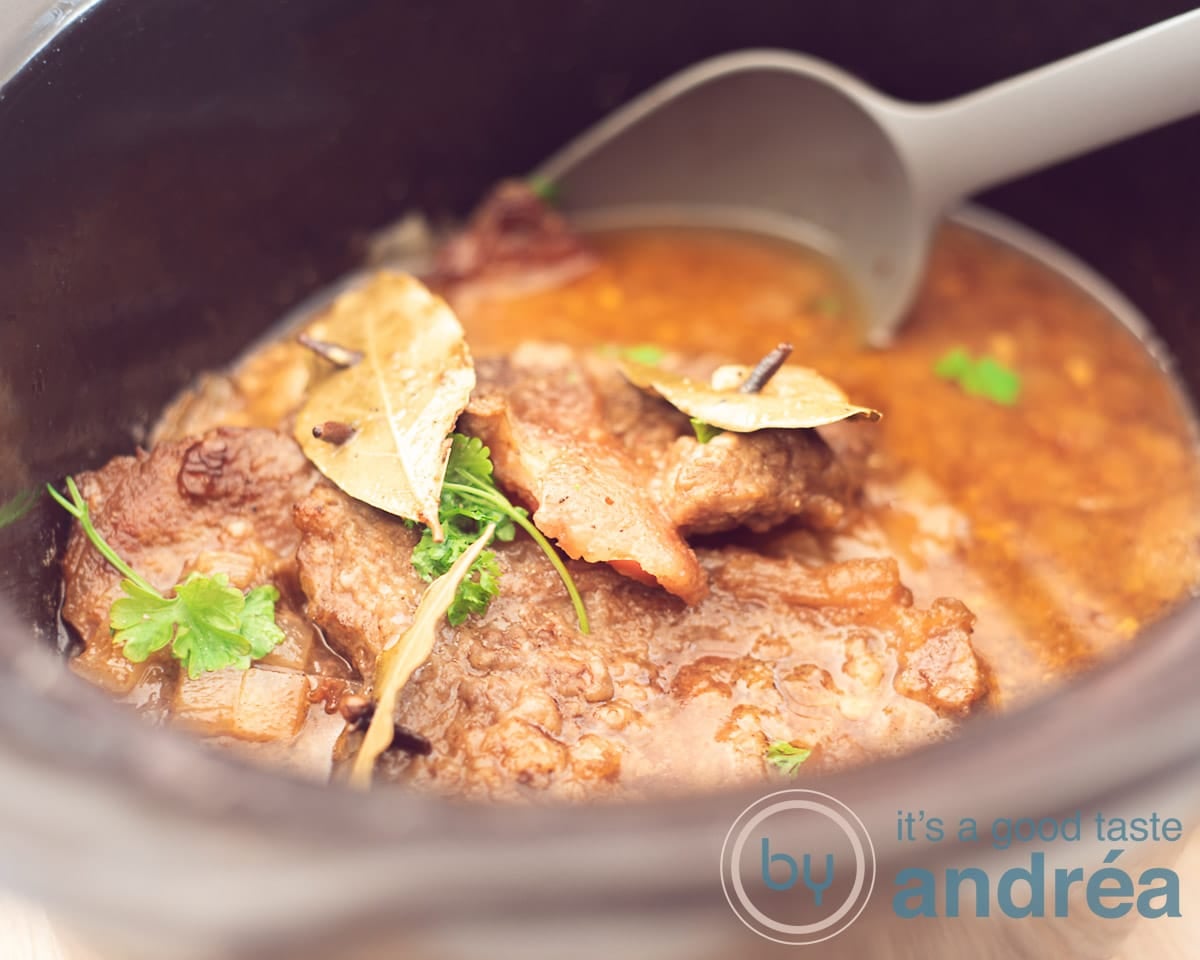
If you want your vegetables and meat to develop some color, brown the meat on all sides first, you can also sauté the onions and tomato paste along with it and then transfer everything to the slow cooker. However, this isn't strictly necessary; the slow cooker is designed to cook everything without prior browning. So, if the color doesn't matter much to you, you don't necessarily have to sear the meat beforehand. I've compared the two methods many times now, and the difference in taste is negligible.
You usually won't need to stir. Keep the lid on during cooking, since lifting it releases heat and can add to the cooking time.

How Much Liquid Should You Add?
Meat and vegetables release moisture as they cook. With the slow cooker lid on, most of that liquid stays in the pot, so you'll usually need less than you would on the stove.
For a stew, start with one-third to one-half less added liquid. If your original recipe uses 2 cups of broth, start with about 1 to 1⅓ cups. Look at the other ingredients before adding the broth. Canned tomatoes and coconut milk add liquid as well as flavor. Reduce plain water or broth first, rather than cutting every liquid ingredient by the same amount.
For a broth-based soup, you can usually keep the original amount of liquid. Taste it at the end and adjust the seasoning.
If the sauce is still too thin after slow cooking? No panic! Lift out the meat and vegetables and reduce the liquid in a saucepan. You can also thicken the sauce with a cornstarch slurry. Check the package directions for the amount to use for your quantity of sauce. Mix the cornstarch with cold water before stirring it in, then cook on HIGH until the sauce thickens.
Tips That Make a Difference
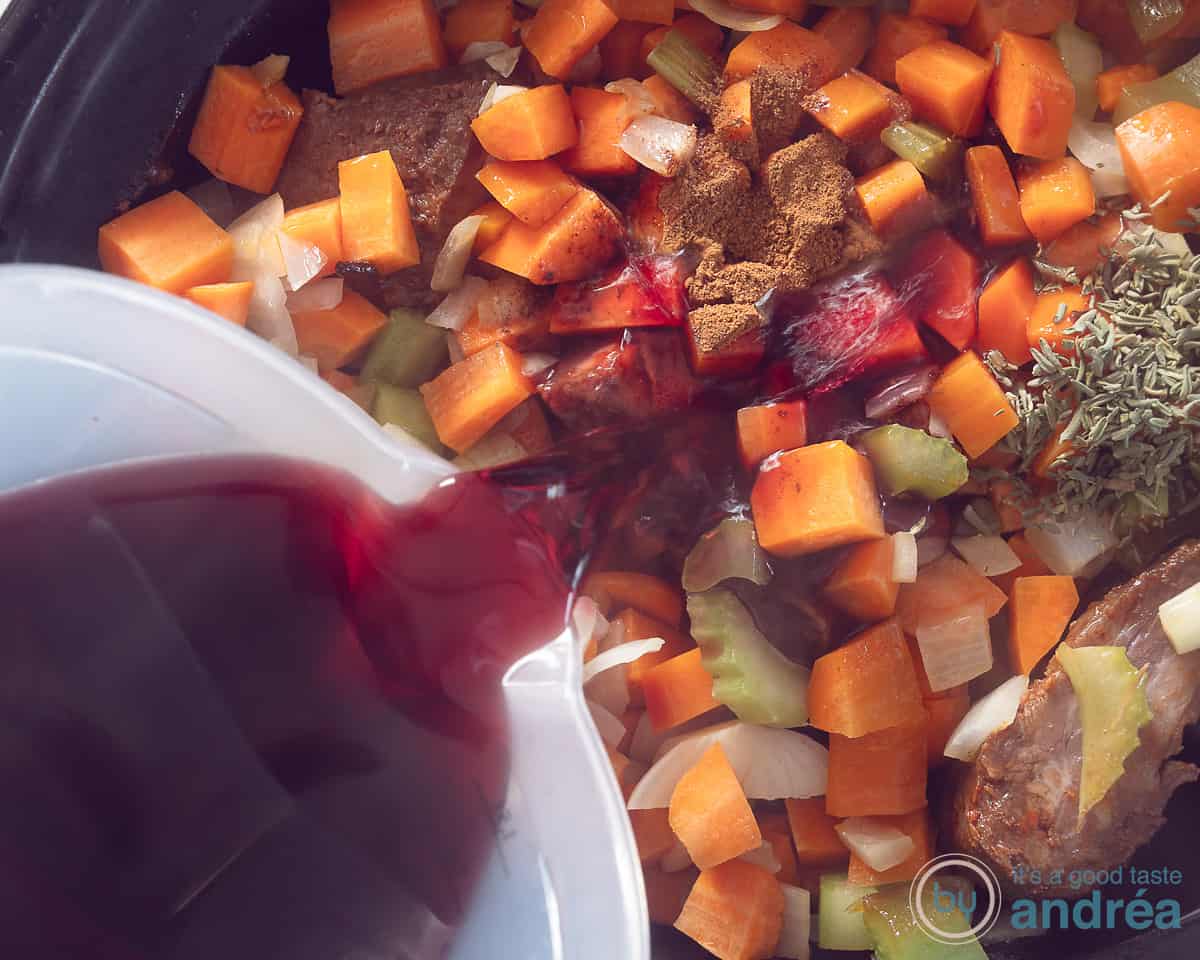
Adding Wine or Beer. You can add wine or beer directly, or simmer it in a separate pan first. A brief simmer can soften the sharp flavor, but two minutes of cooking won't remove most of the alcohol. Don't count on a covered slow cooker to cook it all off, either.
Put Firm Vegetables at the Bottom: Put firm vegetables, such as potatoes and carrots, at the bottom and around the sides of the slow cooker. Cut them into small pieces of roughly the same size. Large chunks can still be firm when the meat is ready. Before serving, test a piece with a fork. It should slide into the center easily.
Add Dairy and Pasta Later: Milk and cream can separate during hours of cooking, and cheese can turn grainy. These ingredients often work best when added during the last 30 minutes. For your first attempt at adapting a recipe, cook the pasta separately according to the package directions. Stir it into the finished dish just before serving. If you're using a tested slow cooker pasta recipe, follow its cooking time and liquid amounts.
Should You Use LOW or HIGH?
For beef stew, LOW is handy when you can start in the morning. HIGH gives you a shorter cooking window, but still takes several hours. Follow the setting and timing in a tested slow cooker recipe when you have one. When adapting your own recipe for the first time, allow some extra time in case the meat needs longer.
How Do You Know When Your Food Is Done??
Check both the temperature and texture before serving. Use an instant-read thermometer to check that the meat has reached a safe internal temperature or the type and cut you're cooking.
For beef stew, check the texture with a fork as well. The meat should pull apart with little pressure. If it has reached a safe temperature but still feels tough, put the lid back on and let it cook longer..
As a general guide, fill your slow cooker between halfway and two-thirds full. An overfilled pot can heat slowly or unevenly. A nearly empty one may cook faster than the chart suggests. Check your model's instructions if you're unsure, since the recommended fill level can vary.
Thaw frozen meat and poultry safely before putting them in the slow cooker. Once you've added the ingredients, turn it on right away.
Keep Notes for Next Time
Once you've tried your own recipe in the slow cooker, write down the setting and how long it took. Note how much liquid you added and whether the sauce needed thickening. Next time, you can start with those amounts and adjust from there.
Slow Cooker Recipes to Try
Want to follow a recipe before adapting your own? These slow cooker recipes give you cooking times and liquid amounts to work with.
- Grandma's draadjesvlees (Dutch beef roast): old-fashioned, tender stewed meat with a rich gravy.
- Grandma's Dutch Beef and onion stew (hachee): tender beef, plenty of onions, and that familiar, spiced flavor.
- Slow-cooker beef curry: spiced beef in a mild coconut milk sauce.
- Slow-cooker chicken coconut chicken curry: easy to prepare and full of warm spices.
- Slow-cooker Hungarian beef goulash soup: a hearty, filling soup perfect for cold days.
- Slow-cooker sticky soy pork chops: tender chops with a sticky, savory sauce.
Looking for something else? Browse my easy slow cooker recipes for more dinner ideas.
Leave a Reply